Wie groß ist die Diskrepanz zwischen rechtlichem Anspruch und betrieblicher Realität bei Nottötungen?
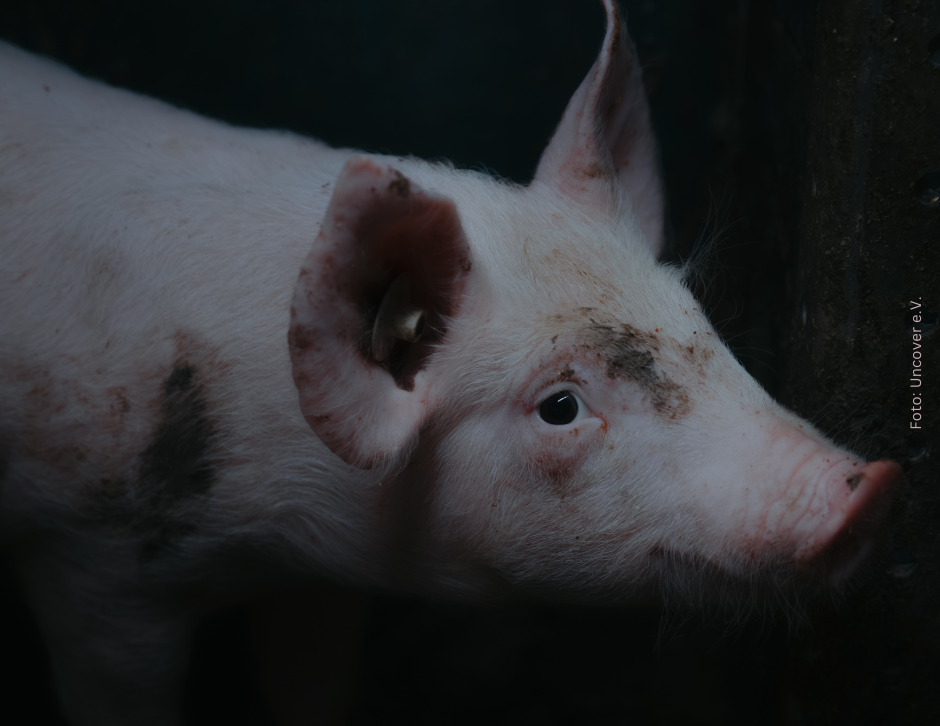
Nottötungen sollen schwer kranke oder verletzte Tiere vor weiterem Leid bewahren. In der industriellen Schweinehaltung ist diese eigentlich als Ausnahme gedachte Maßnahme jedoch längst Teil des betrieblichen Alltags. Unser neues White Paper untersucht die zugelassenen Nottötungs- und Betäubungsverfahren aus tierschutzfachlicher Perspektive und zeigt, wie groß die Diskrepanz zwischen rechtlichem Anspruch und betrieblicher Realität ist. Doch auch legale Methoden erweisen sich oft als nicht ausreichend tierschutzgerecht.
Die Dimensionen sind erheblich: Schätzungen zufolge sterben jährlich rund 13,6 Millionen Schweine in Deutschland noch vor der Schlachtung. Das entspricht etwa 21 Prozent der lebend geborenen Tiere. Wie viele davon notgetötet werden, ist mangels systematischer Erfassung nicht bekannt.
Eine Befragung unter deutschen Landwirt_innen zeigt allerdings, dass Nottötungen für viele Betriebe keine Ausnahme sind: 78 Prozent der Befragten gaben an, in den vorangegangenen zwei Wochen mindestens ein Schwein notgetötet zu haben.
Das White Paper beleuchtet die rechtlichen Grundlagen und analysiert die zugelassenen Methoden. Dabei wird deutlich: Auch legale Verfahren bergen erhebliche tierschutzrelevante Risiken. Untersuchungen an sogenannten Falltieren belegen wiederholt fehlerhafte Betäubungen und Tötungen. In einer Studie wiesen fast 25 Prozent der untersuchten Tiere Spuren falsch angesetzter Bolzenschüsse oder fehlerhaft positionierter Elektroden auf. Solche Fehler verursachen bei den betroffenen Tieren zusätzlich erhebliche Schmerzen und Leid.
In der Tierindustrie werden auch lebensfähige, aber wirtschaftlich unrentable Tiere getötet. Dies betrifft insbesondere Ferkel – etwa, weil sie besonders klein sind oder Würfe mit mehr Ferkeln als verfügbaren Zitzen geboren werden. Nottötungen sind das nicht – im Gegenteil: Wer ein lebensfähiges Tier tötet, macht sich strafbar. Umgekehrt bleiben schwer kranke oder verletzte Tiere teilweise über längere Zeit ohne ausreichende Behandlung oder notwendige Nottötung ihrem Leid überlassen.
Das White Paper zeigt, dass eine differenzierte Bewertung der Nottötung von Schweinen weit über die Betrachtung einzelner Verfahren hinausgehen muss.
Entscheidend sind nicht nur die belegte Wirkung und die tierschutzfachliche Eignung der zugelassenen Methoden, sondern auch ihre Fehleranfälligkeit und die Risiken bei der praktischen Anwendung.
Auf Grundlage aktueller Studien und wissenschaftlicher Erkenntnisse analysiert das White Paper, unter welchen Bedingungen Nottötungen tatsächlich eine Leidensverkürzung bewirken können – und wo die bestehenden Verfahren und ihre Umsetzung den Anforderungen des Tierschutzes nicht gerecht werden.
Laden Sie das White Paper am Ende der Seite kostenfrei herunter.
Stützen Sie sich auf unser Fachwissen und unsere Erfahrung. Expertise for Animals unterstützt Sie mit Fakten-Checks, Positionspapieren und Hintergrundinformationen für Ihre nächste Kampagne. Lesen Sie mehr zu unserem Beratungsangebot.
Lorem ipsum dolor sit amet, consectetur adipiscing elit. Suspendisse varius enim in eros elementum tristique. Duis cursus, mi quis viverra ornare, eros dolor interdum nulla, ut commodo diam libero vitae erat. Aenean faucibus nibh et justo cursus id rutrum lorem imperdiet. Nunc ut sem vitae risus tristique posuere.

The rich text element allows you to create and format headings, paragraphs, blockquotes, images, and video all in one place instead of having to add and format them individually. Just double-click and easily create content.
A rich text element can be used with static or dynamic content. For static content, just drop it into any page and begin editing. For dynamic content, add a rich text field to any collection and then connect a rich text element to that field in the settings panel. Voila!
Headings, paragraphs, blockquotes, figures, images, and figure captions can all be styled after a class is added to the rich text element using the "When inside of" nested selector system.


