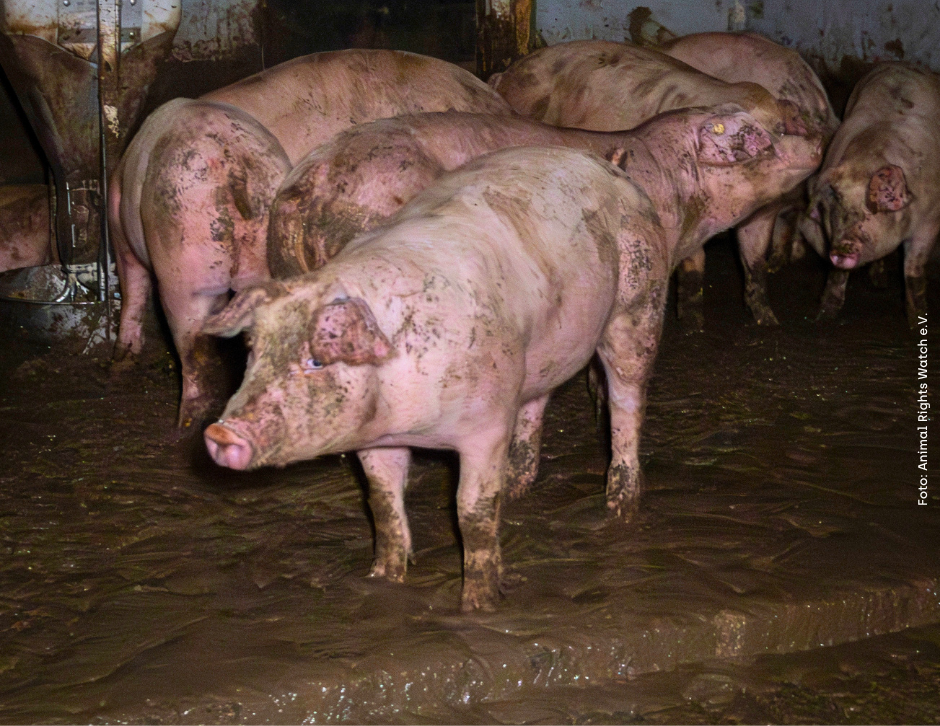
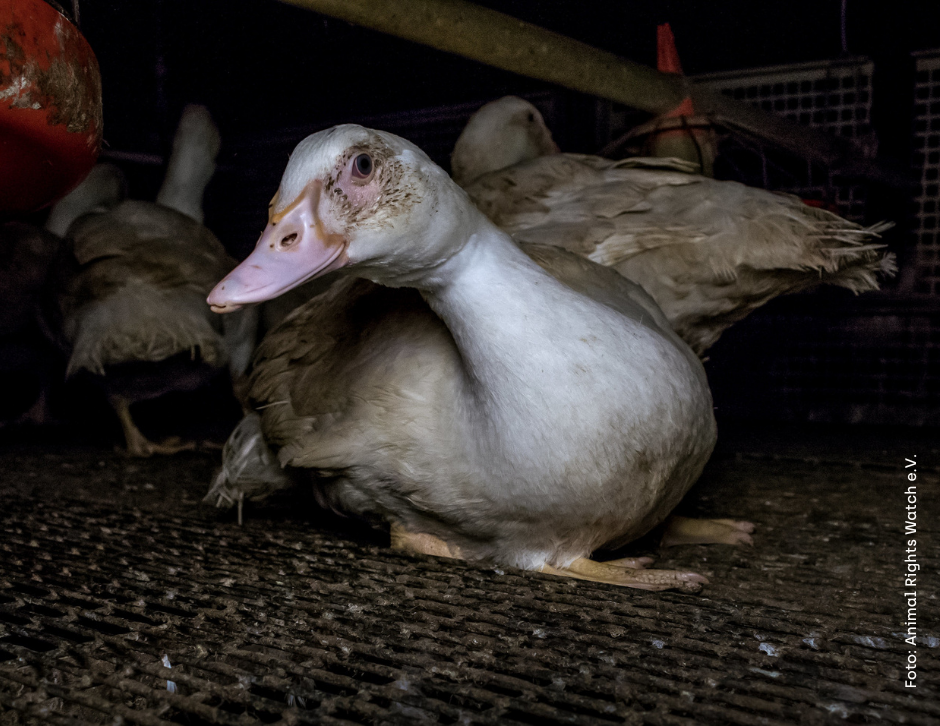
Der neue Report über die CO₂-Betäubung von Schweinen.
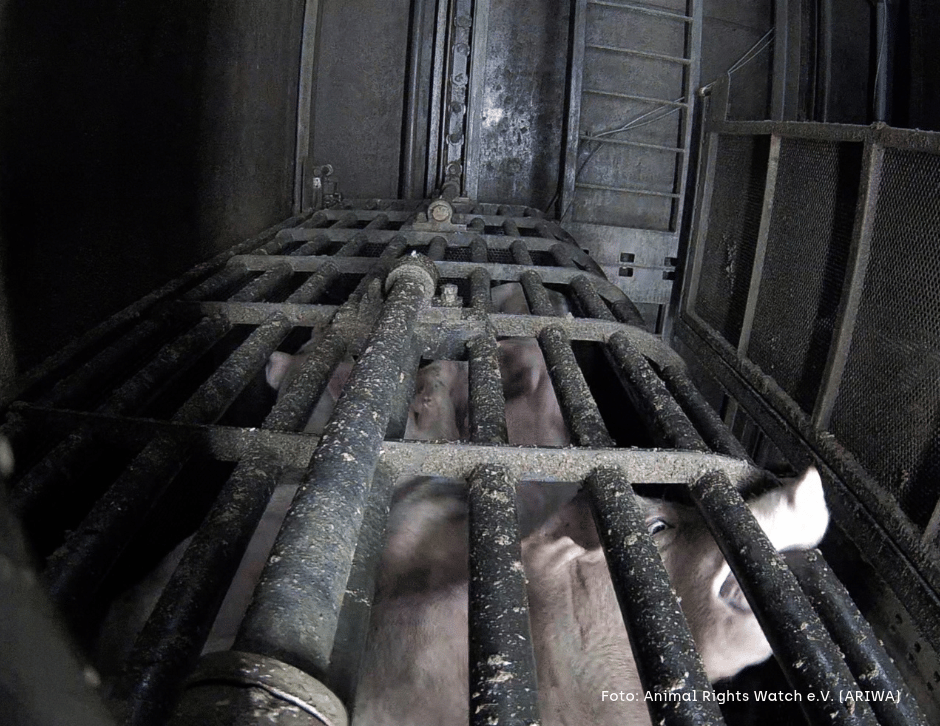
Expertise for Animals hat im Auftrag von Animal Rights Watch e.V. (ARIWA) aktuelle Videoaufnahmen aus einem Schlachthof im Hinblick auf tierschutzrelevante Aspekte ausgewertet.
Im Fokus des Reports steht die Betäubung von Schweinen mit CO2-Gas. Seit Jahrzehnten wird diese Methode von Tierschutzorganisationen und der Europäischen Lebensmittelbehörde EFSA kritisiert. Die Studienlage zur Wirkung von CO2 belegt eindeutig vermeidbares Tierleid. Dennoch ist es die meistgenutzte Betäubungsmethode in der EU. Allein in Deutschland werden rund 80 Prozent der gehaltenen Schweine so betäubt – das sind etwa 35 Millionen Tiere jährlich.
Die Betäubung stellt jedoch nur einen Teil des Schlachtprozesses dar. Die Aufnahmen dokumentieren die gesamte letzte Etappe im Leben der Schweine, vom Zutrieb zur Betäubungsanlage bis zur Tötung. An ihnen lässt sich ein Schlachthof-Alltag erkennen, dessen Ablauf sich in den meisten modernen Schlachtanlagen wiederfindet. Unser Report bewertet den Umgang mit den Tieren vor und während der Tötung, identifiziert Verstöße gegen geltende Tierschutzvorgaben und verweist auf die entsprechenden Gesetze und Verordnungen.
Wie wir unsere Rolle bei der Aufdeckung von Tierleid verstehen, können Sie in diesem Artikel nachlesen.
Laden Sie den vollständigen Report am Ende der Seite kostenfrei herunter.
Melden Sie sich jetzt für unseren Newsletter an und bleiben Sie über alle relevanten Tierschutzthemen informiert.
Stützen Sie sich auf unser Fachwissen und unsere Erfahrung. Expertise for Animals unterstützt Sie mit Fakten-Checks, Positionspapieren und Hintergrundinformationen für Ihre nächste Kampagne. Lesen Sie mehr zu unserem Beratungsangebot.
Lorem ipsum dolor sit amet, consectetur adipiscing elit. Suspendisse varius enim in eros elementum tristique. Duis cursus, mi quis viverra ornare, eros dolor interdum nulla, ut commodo diam libero vitae erat. Aenean faucibus nibh et justo cursus id rutrum lorem imperdiet. Nunc ut sem vitae risus tristique posuere.

The rich text element allows you to create and format headings, paragraphs, blockquotes, images, and video all in one place instead of having to add and format them individually. Just double-click and easily create content.
A rich text element can be used with static or dynamic content. For static content, just drop it into any page and begin editing. For dynamic content, add a rich text field to any collection and then connect a rich text element to that field in the settings panel. Voila!
Headings, paragraphs, blockquotes, figures, images, and figure captions can all be styled after a class is added to the rich text element using the "When inside of" nested selector system.