May 27, 2026
What did Expertise for Animals achieve over the past year?
What did Expertise for Animals achieve over the past year?
Annual reports are more than a formality. They show how support turns into tangible impact. Our review of 2025 is therefore more than an obligation to transparency — it is an insight into the work that was only made possible thorough the trust of our supporters and project partners.
Of course, transparency is part of it — being accountable and showing clearly how entrusted resources are used. But a good annual report does more than that. It demonstrates how resources are turned into impact: which issues drive an organization, which decisions it has to make, and how it fulfills its mission within a complex environment.
For Expertise for Animals, 2025 was a year that highlighted particularly clearly how important independent scientific expertise is for animal protection.
Our core mission remained unchanged: to produce scientifically grounded analyses on issues related to industrial animal agriculture, to provide independent expert advice, and to support partner organizations with robust, evidence-based expertise.
This means collaborating with animal welfare and animal rights organizations that require scientific assessments for their policy work. It also includes providing expert input for campaigns and statements where reliable data and veterinary interpretation are essential. In addition, we support organizations in translating complex scientific content in ways that make it effectively usable in political discussions and public debates.
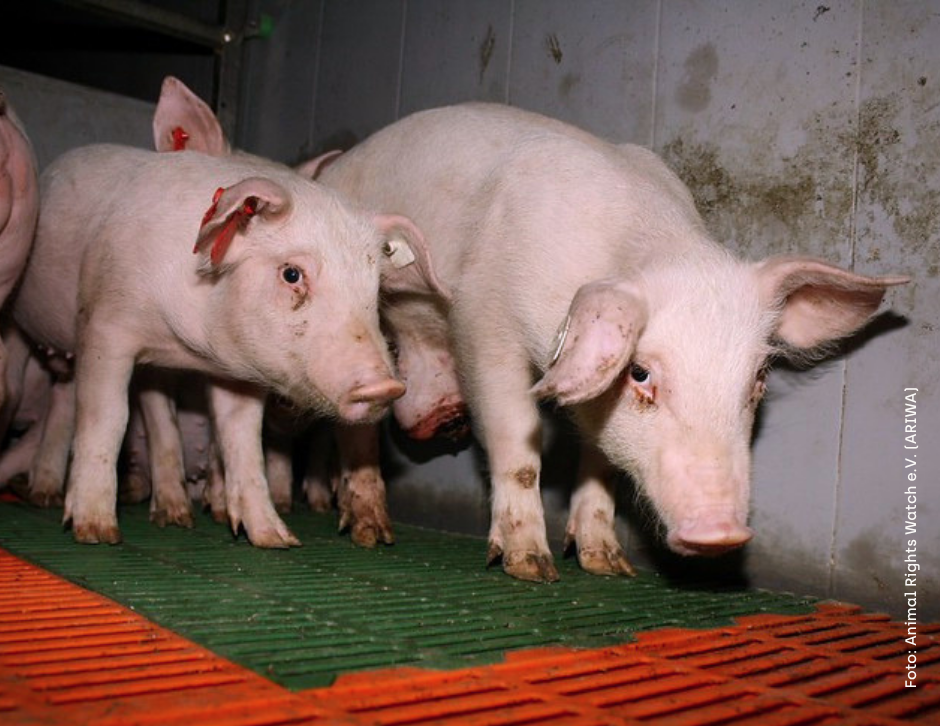
For the non-profit organization Animal Rights Watch (ARIWA), we conducted a veterinary analysis of extensive video material from pig farms marketed as higher welfare systems in Germany and identified recurring problems in key areas of these supposedly improved housing systems. In collaboration with ANINOVA, we also evaluated video material and identified animal welfare violations in turkey fattening operations.
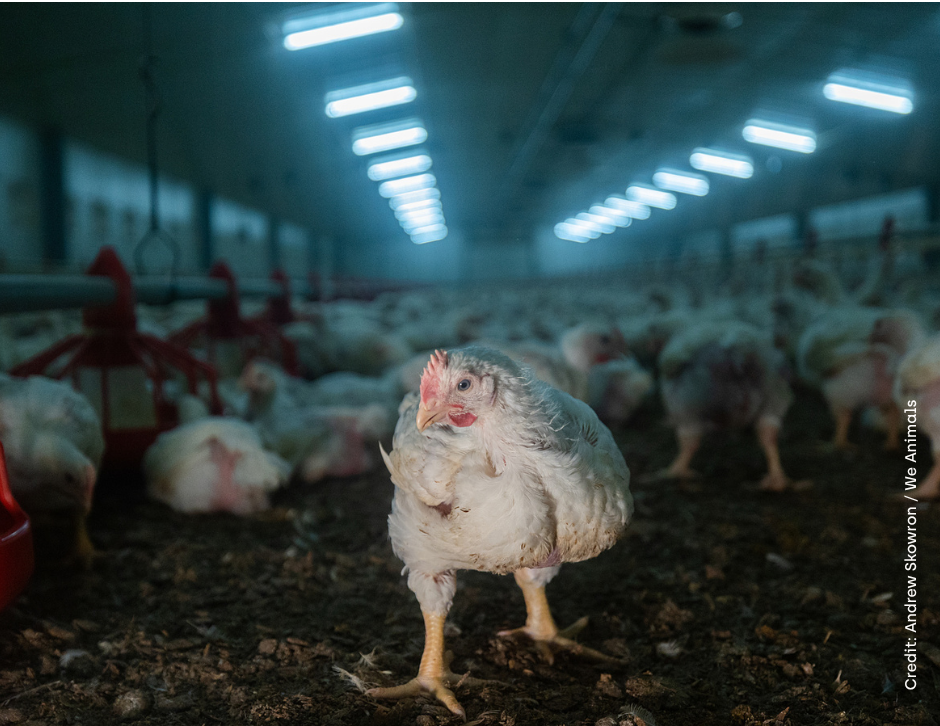
In addition, we published a more than 200-page scientific report on the legal minimum requirements for broiler chicken husbandry. We also supported the Albert Schweitzer Foundation in revising and updating a background article on sows in piglet production. Through our contribution, we helped ensure that these articles remain a reliable and scientifically sound source of information for the general public and the foundation’s animal welfare work.
In societal debates that are often shaped by emotions and competing interests, spaces grounded in scientific rigor and professional independence are essential. Providing such information also serves as a counterbalance to lobbying efforts that not infrequently make use of misinformation for their own purposes.
Our other successfully completed projects can be found in the activity report.
At the same time, 2025 was a year of adaptation. Due to limited financial resources, we had to reduce our team in late summer. For the remainder of the year, operational work was temporarily carried out by a single full-time staff member. The fact that our core work could nevertheless continue without interruption speaks to the resilience of our organization — and to the commitment of the people who support it.
This phase was challenging, but also instructive. It clearly showed us where we need to strengthen our organizational structures: in long-term funding and greater resilience. This is exactly what we are working on.
We also continued to invest in our expertise in 2025. Through further education — including training on current animal welfare law issues and scientific developments in the field of animal production — we were able to further deepen our knowledge. This continuous learning is not an add-on, but a prerequisite for the quality of our work.
At the end of 2025, we secured funding for a new white paper on the use of carbon dioxide for stunning pigs in slaughterhouses. Its publication this May has made another valuable contribution to the ongoing debate on animal welfare standards in the EU.
It is especially important for us to close this outlook with good news: Expertise for Animals is financially secured through the end of 2026. This provides a solid foundation for continuing our work with reliability and impact.
Our gratitude goes to everyone who makes this possible. Every form of support helps ensure that independent scientific expertise remains accessible and usable in the interest of animals.
Anyone who would like to explore our 2025 in detail can find the full activity report here.
With your support, we can continue to translate scientific knowledge into accessible insights, make systemic problems visible, and strengthen the animal movement with robust evidence. Every donation helps us advance evidence-based education and drive long-term change for non-human animals.
Support our work now with a donation.