September 11, 2026
Precedent-setting case: Court convicts farmer of a criminal offence for year-round cattle tethering for the first time.

Precedent-setting case: Court convicts farmer of a criminal offence for year-round cattle tethering for the first time.
In this article, we take a closer look at what happened in Germany, what the ruling means for the animals affected, and why it has implications far beyond this individual case.
For the first time, a German court has classified the permanent tethering of cattle as animal cruelty. The ruling thus confirms the recently published expert assessment by Expertise for Animals: Our report concludes that permanent tethering violates animal welfare requirements.
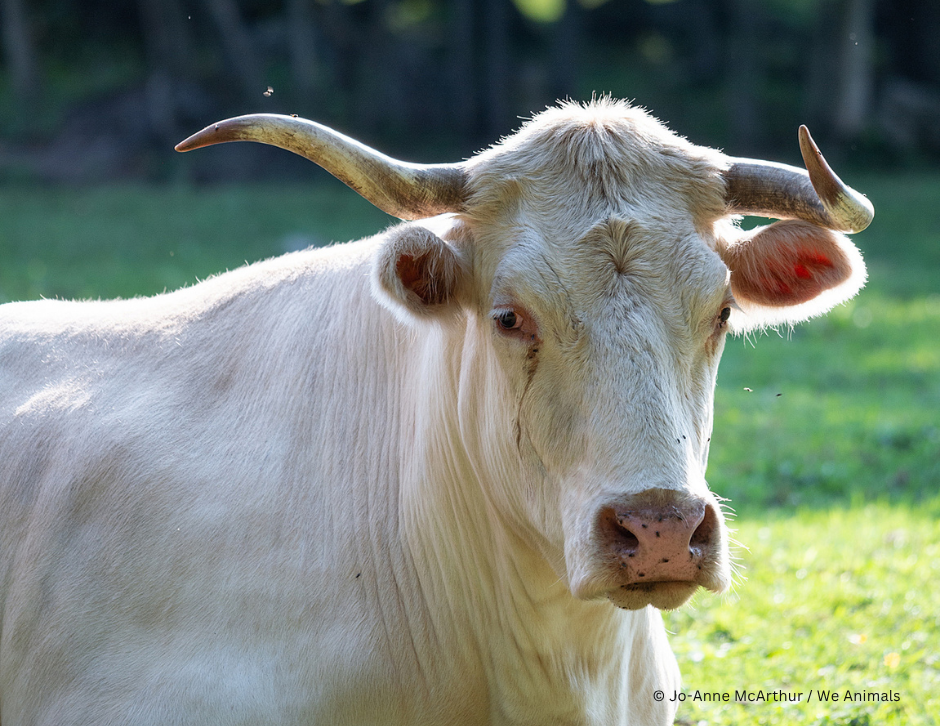
More than one million cattle in Germany spend their lives, or large parts of them, tethered. They cannot move freely, choose where to lie down, or even turn around.
What is an everyday reality for these animals has now, for the first time, had criminal consequences.
The Villingen-Schwenningen Local Court has criminally convicted a farmer for permanently tethering cattle. In this case, three young cattle aged between seven and 23 months were permanently tethered. They could not turn around, lie down properly, or practically express their natural urge to move. The court found that this caused them “prolonged considerable suffering”.
For the first time, the permanent confinement of cattle solely on the basis of their housing conditions was thus classified as a criminal offence under Section 17 of the German Animal Welfare Act.
This is a precedent.
The German Animal Welfare Act requires animals to be housed in a manner that accommodates their species-specific behaviour. Tethering restricts cattle to such an extent that chronic pain, lack of movement and stress are inevitable. Cattle are social animals that live in herds, travel several kilometres and graze on fresh grass. Permanent tethering completely prevents them from expressing this natural urge to move. Studies show that tethered animals experience higher rates of disease and behavioural disorders. Nevertheless, this practice continues to be used on both organic and conventional farms – while dairy companies advertise animal welfare, close human-animal relationships and vibrant rural communities.
Now a court has ruled: This form of housing causes the animals considerable and prolonged suffering.
A conviction that could encourage veterinary authorities across Germany to finally take consistent action against this form of husbandry.
This also means that veterinary authorities do not have to wait for an explicit ban before taking action against cruel housing conditions. On the contrary, they are required to do so.
This case shows how a science-based assessment can make visible the impact of housing conditions on animal welfare. Our expert assessments and analyses provide the evidence base that courts, authorities and the media need to draw legal consequences and no longer tolerate animal suffering.
More than one million cattle are still waiting for freedom of movement.
We cannot allow a historic conviction to remain an isolated case.
Support our work with a donation. Help us make scientific evidence visible, expose animal suffering, and increase pressure on policymakers, authorities and the farming industry.
For a world in which animals are treated not as commodities, but as sentient beings.
Thank you for standing with us.