August 26, 2026
Since August 2026, stunning and killing with the controversial nitrogen foam has been permitted.
Since August 2026, stunning and killing with the controversial nitrogen foam has been permitted.
The EU has expanded the list of approved stunning and killing methods for pigs and chickens to include the controversial nitrogen foam. The method is considered to provide a level of welfare at least equivalent to already authorised methods such as CO₂. Yet CO₂ stunning itself causes severe animal suffering.
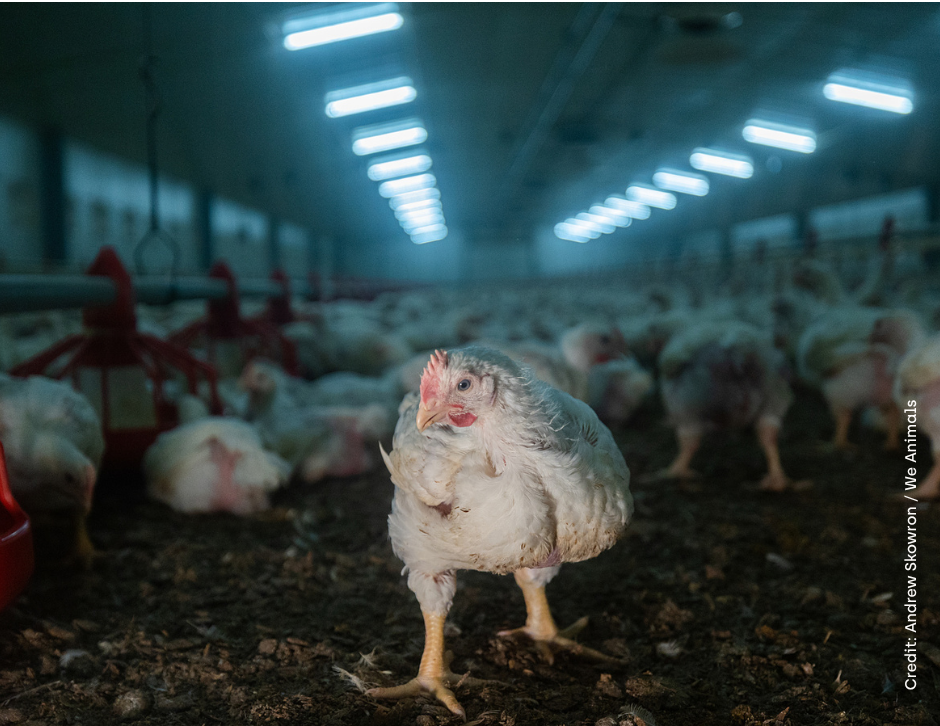
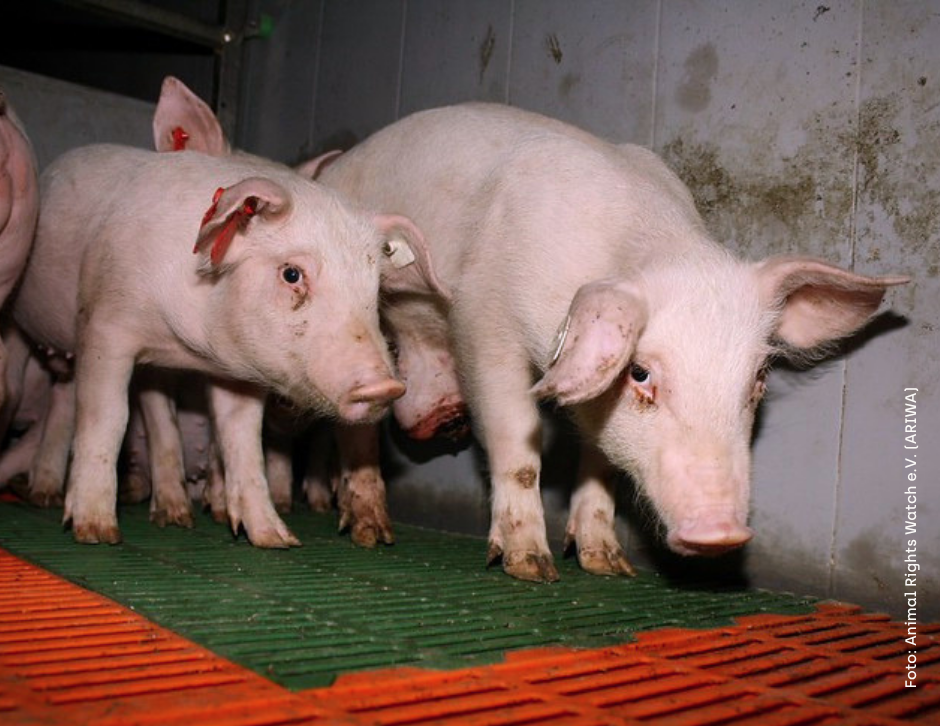
Since 6 August 2026, nitrogen foam has, for the first time, been authorised for killing animals outside the slaughter process, directly on farms. The regulation applies to laying hens and broiler chickens, as well as pigs weighing between 15 and 41 kilograms. The proposal to change the legislation came from a business operator in the animal industry, while research was funded by the slaughter company Tönnies.
According to the EU Regulation, new or modified methods must provide a level of animal welfare that is at least equivalent to already authorised procedures. But what does this say about the standard for animal welfare if the currently authorised method already causes serious animal welfare problems?
In Nitrogen Expansion Foam Stunning (NEFS), animals are confined inside a specially designed container. A highly expanded foam carries nitrogen and displaces the surrounding air. The oxygen concentration is intended to fall below two percent. The animals gradually lose consciousness and subsequently die from oxygen deprivation. The new EU regulation requires an exposure time of at least five minutes for chickens and seven minutes for pigs. The authorisation is based on a scientific opinion by the European Food Safety Authority (EFSA).
In its opinion, EFSA argues that new on-farm killing methods are urgently needed to address the growing risks posed by epidemics such as avian influenza and African swine fever. The method may also be used for the emergency killing of individual sick animals. From the perspective of the animal industry, the main advantage is that several animals can be killed at the same time. By reducing the time and labour required, such methods are highly efficient for commercial operations.
EFSA published its scientific opinion in June 2024. Its conclusion was that, when applied correctly, NEFS appears to achieve a level of animal welfare for the animal groups studied that is “at least equivalent” to existing methods, including stunning with high concentrations of CO₂. For poultry, the method was also compared with electrical waterbath stunning.
However, this does not mean that the method is free from suffering or distress for the animals.
EFSA itself identified a range of potential hazards. These include handling and confinement of the animals, noise, slipping, foam forming too slowly, incorrect oxygen concentrations, excessive stocking density, and the possibility that animals may inhale the foam. The Authority therefore reached a nuanced conclusion: there is insufficient evidence to support the applicant’s claim that pigs experience no pain, fear, or respiratory distress before losing consciousness.
At the same time, EFSA considered the available evidence sufficient to classify the method as at least equivalent to already authorised procedures.
The Authority concluded that it is more likely than not that NEFS achieves at least the same level of animal welfare as one or more authorised methods. This is a probabilistic assessment and does not mean “scientifically proven to be equivalent”.
That is an important distinction.
For decades, EFSA has described the stunning of pigs with high concentrations of CO₂ as a serious animal welfare concern. In its 2020 scientific opinion on the slaughter of pigs, EFSA states that high concentrations of CO₂ are highly aversive for pigs and cause pain, fear, and respiratory distress. CO₂ irritates the mucous membranes and, before the loss of consciousness, causes sensations including breathlessness and “air hunger”.
EFSA therefore explicitly recommends replacing stunning with high concentrations of CO₂ with less aversive gas mixtures. The European Commission has not implemented this recommendation to date, arguing that such a transition would be too expensive for the industry. CO₂ stunning remains the standard method for pigs in slaughterhouses across Germany and the EU. It affects almost 140 million animals every year.
For the application to authorise the new method, this means one thing above all: it does not have to be demonstrated that nitrogen foam causes no suffering. It only has to be shown that its level of animal welfare is not lower than that of methods that are already authorised.
The underlying evidence also deserves closer attention.
The European Commission received the application from an business operator in December 2021. The fact that the initiative for authorisation came from the animal industry is not unusual. Under EU law, “any person with an interest in the approval of a new or modified stunning method may submit the necessary technical and scientific data”.
In its assessment, EFSA considered only two published studies included in the application. Additional ongoing research and unpublished field trial data were available but, according to EFSA, could not be used for the scientific evaluation.
One of the key studies on pigs is the 2020 study by Lindahl and colleagues. It investigated pigs’ responses to nitrogen delivered through highly expanded foam. This study was funded by Tönnies Research, the research institute of Germany’s largest slaughter company. This is stated both in the publication itself and in information provided by the Swedish University of Agricultural Sciences (SLU).
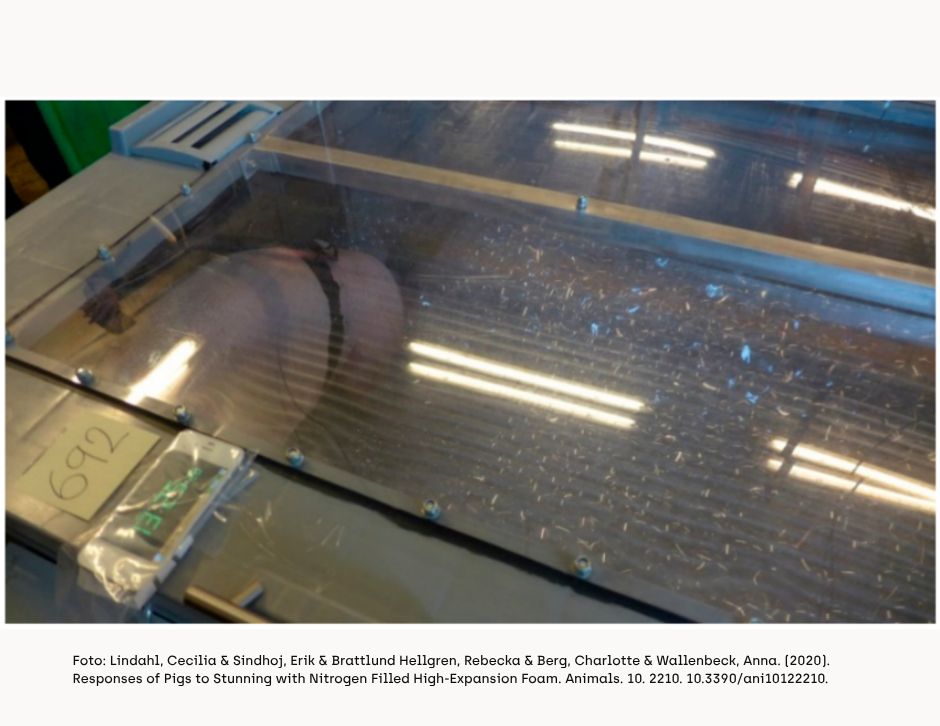
The funding does not prove that the results are incorrect. However, it is relevant context when assessing the scientific evidence—particularly because this study became an important basis for the subsequent evaluation of the method.
EFSA also points to methodological limitations of the study. For example, no pain relief was administered that could have helped distinguish pain from fear, and no corresponding post-mortem examinations were carried out.
Another aspect that receives little attention is the long period before animals lose consciousness. In one study, pigs lost their posture only after approximately 43 to 76 seconds. This means the animals experience the procedure while still conscious. They vocalise and attempt to escape from the container. In another study, even an exposure time of 3.5 minutes could not reliably guarantee unconsciousness and insensibility in all animals.
Taken together, the evidence currently available clearly argues against the use of nitrogen expansion foam.
Nitrogen foam stunning is also currently being investigated for use in the slaughter of pigs. In our recent White Paper on CO₂ stunning (in german), we assessed the associated animal welfare concerns. The available studies clearly show that both nitrogen foam stunning and nitrogen–CO₂ gas mixtures cause pain, stress, and defensive reactions in animals, and therefore cannot be regarded as less or non aversive stunning methods.
Expertise for Animals is currently working intensively on the issues of gas stunning and the emergency killing of pigs. To continue this work and strengthen the animal protection movement with scientifically robust evidence, we need your support. Every donation helps.