November 2, 2026
What role do economic interests play in political decisions on animal welfare?
What role do economic interests play in political decisions on animal welfare?
The European Commission continues to permit the stunning of pigs using highly concentrated carbon dioxide (CO₂), despite scientific recommendations to the contrary.
This was made clear by Olivér Várhelyi, the EU Commissioner for Health and Animal Welfare, in a letter to animal welfare organisations in June 2026. In the letter, the Commission explicitly acknowledges that the European Food Safety Authority (EFSA) considers CO₂ stunning harmful to pigs. Nevertheless, the EU has no plans to ban the practice. Its justification is that alternative methods are neither practical nor economically viable for industrial slaughter.
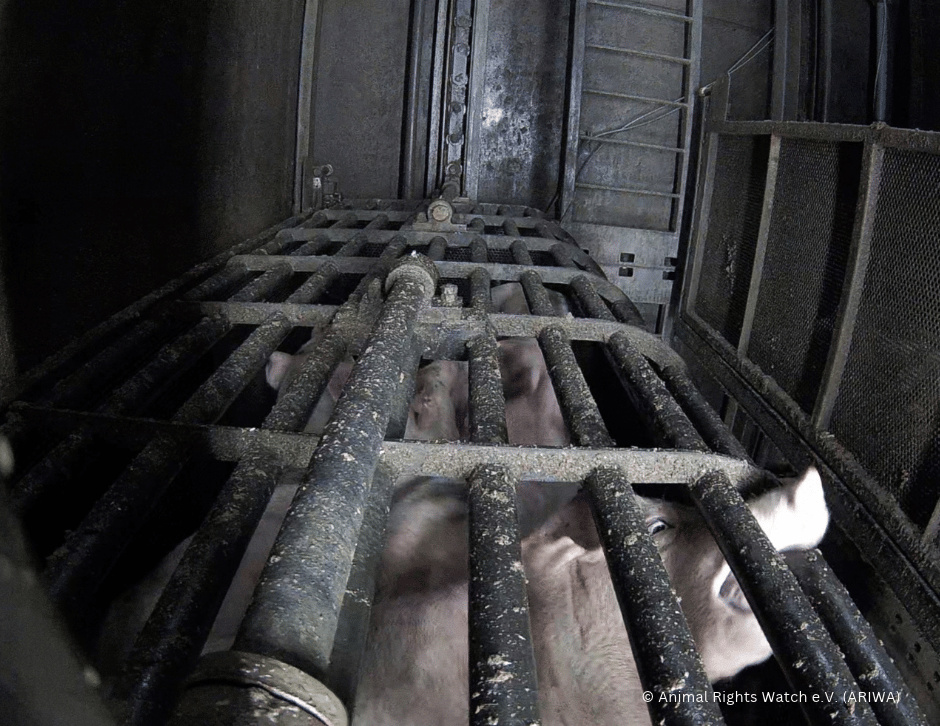
These statements, together with video footage from CO₂ stunning chambers circulating in the media, have sparked renewed debate – even though the scientific evidence is by no means new. For more than twenty years, the EFSA has consistently confirmed that CO₂ stunning causes considerable suffering to animals. This case illustrates how scientific advice works within the European Union and the role economic interests play in the legislative process.
Criticism is no longer coming solely from animal welfare organisations. Pressure on the Commission is also growing within the European Parliament. In early 2026, Austrian MEP Thomas Waitz (Grüne/EFA) submitted a written question to the Commission, asking whether stunning pigs with highly concentrated CO₂ can still be considered compatible with Article 13 of the Treaty on the Functioning of the European Union in light of the scientific evidence. This provision requires the EU to take full account of animal welfare requirements, since animals are sentient beings, when formulating and implementing its policies. Waitz also asked the Commission whether it had a timetable for phasing out CO₂ stunning.
Back in 2025, Belgian MEP Pascal Arimont (EPP) had already asked about the consequences of the EU research project “PigStun”. He wanted to know how the Commission intended to use the findings and whether it was planning any legislative action. Várhelyi's response was limited to stating that the alternatives examined in the project were indeed better than CO₂ stunning – and had therefore been approved by the EU.
Pressure is also mounting at national level. In January 2026, German Bundestag member Zoe Mayer (Bündnis 90/Die Grünen) addressed CO₂ stunning in a speech to the parliament, referring to video footage from slaughterhouses. Mayer links the debate to calls for greater transparency and public oversight of slaughterhouse operations.
The European Food Safety Authority (EFSA) was established in 2002 in response to several food scandals. Based in Parma, Italy, the agency assesses potential risks to humans and animals throughout the food chain, including those arising from the use of pesticides and food additives. Since animals are part of food production, the EFSA also assesses farm animal welfare, including housing conditions and treatment of animals during transport and slaughter.
Its role is to assess risks independently and summarise the current state of scientific research. The EFSA issues recommendations but does not enact legislation. Political decisions are made by the European Commission, the European Parliament and the Member States.
This division of responsibilities explains why scientific findings do not automatically lead to stricter regulations.
As early as 2004, the EFSA published its first comprehensive scientific opinion on CO₂ stunning in pigs. It concluded that although high concentrations of CO₂ reliably induce unconsciousness, the animals experience considerable distress beforehand. This is due to the gas's highly aversive nature. Studies show that pigs display strong defensive reactions as soon as they inhale CO₂. They try to escape, gasp for air and scream. The effects described include pain caused by irritation of the mucous membranes, respiratory distress, fear responses and defensive movements. Since the gas itself is the source of the problem, the method cannot be improved to eliminate these harmful effects.
Further studies in subsequent years confirmed these findings. The EFSA was particularly explicit in its 2020 assessment. It states that high concentrations of CO₂ cause pain, fear and respiratory distress, making the method highly problematic from an animal welfare perspective. The EU Slaughter Regulation stipulates that animals must be rendered unconscious and insensible “without pain”. The EFSA therefore points to alternative stunning methods that could reduce animal suffering and bring slaughter practices into compliance with legal requirements.
When the European Union drafted its new Slaughter Regulation in 2009, the EFSA's scientific assessment was already available. The Commission even explicitly took it into account during its deliberations. Nevertheless, CO₂ stunning remained permissible.
The Commission did not dispute the scientific findings but decided against a ban for political reasons. It concluded that phasing out the method would have significant economic consequences for the European slaughter industry.
This argument continues to shape the Commission's position today, 17 years later. Várhelyi likewise points out that alternative methods are already authorised, but have not yet been widely adopted in industrial slaughter. The EU is unwilling to require the slaughter industry to use these alternatives.
Independently of the CO₂ debate, the EFSA itself has come under public scrutiny in recent years. Environmental and consumer organisations have repeatedly raised concerns about potential conflicts of interest involving individual experts and called for greater transparency in scientific assessments. A study published in 2013 by the anti-lobbying organisation Corporate Europe Observatory found that more than half of EFSA scientists had links to the food industry. In response, the EFSA introduced stricter transparency and independence rules.
EFSA recommendations are also failing to find their way into EU law in other areas of animal welfare. Examples include the transport of live animals, battery cage farming and stocking densities. The authority regularly recommends stricter standards than those ultimately adopted by policymakers.
Legislative action is delayed, proposals are watered down or legislative initiatives are postponed because policymakers weigh purely scientific findings against the considerable economic interests of the agricultural lobby, geopolitical trade considerations and the need to reach political consensus among Member States. While the EFSA calls for stricter requirements based on animal welfare science, the Commission operates within a complex political landscape of competing interests. However, it is not only new legislation or amendments that fall short of scientific recommendations. Many practices in industrial animal farming that remain legal are clearly in breach of existing animal welfare legislation.
The case of CO₂ stunning makes this controversy particularly visible. The scientific evidence has been available for more than two decades, and the European Commission does not dispute it. Nevertheless, it has so far chosen not to translate these findings into a ban. The real conflict is not between science and politics per se, but rather one of political priorities. The economic interests surrounding pork production continue to outweigh the animal suffering documented in the EFSA's scientific reports.